You know how it goes with education in Indonesia. Year after year, the government announces bigger budgets. More programs. More digital initiatives. The promises sound good – better quality, equal access, all that.
But here’s the thing nobody in Jakarta seems to want to admit: most kids still aren’t learning much.
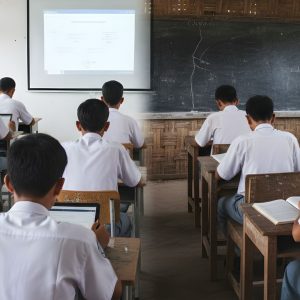
Walk into any classroom outside Java, and you’ll quickly see why. The policies coming out of ministries assume teachers have reliable internet. They assume schools have working computers. They assume everyone’s on the same page.
Spend a week in Eastern Indonesia and those assumptions fall apart pretty quickly.
The Real Problem No One’s Fixing
Look, the challenges aren’t exactly a secret. Researchers at SMERU and BINUS have been pointing them out for years:
Internet is still a luxury in most rural areas. Even where there’s signal, it’s patchy, expensive, and drops out constantly. You can’t run a digital classroom on that.
Then there’s the hardware thing. The government has sent thousands of laptops, smart TVs, and tablets to schools. Great, right? Except most of them sit in boxes or gather dust in a corner. Why? Because teachers open them up, stare at the screen, and think… now what?
There’s no content. Nothing that actually matches the curriculum. So teachers fall back on YouTube, which means ads, random videos, and kids watching cat clips instead of learning math.
And let’s be honest about teachers for a second. They’re already overworked. They don’t need complicated tech that requires a manual and a tech support hotline. They need stuff that just works.
The Geography Problem Nobody Can Ignore
Indonesia isn’t a normal country. We’re 17,000 islands. Some kids go to school by boat. Some schools are in mountains where the nearest town is a day’s hike away.
You can’t solve that with a cloud-first strategy.
The usual approach – throw money at internet infrastructure, wait for connectivity to catch up – isn’t working. It hasn’t worked for decades. It won’t work tomorrow.
A Practical Solution That Fits Indonesia’s Conditions
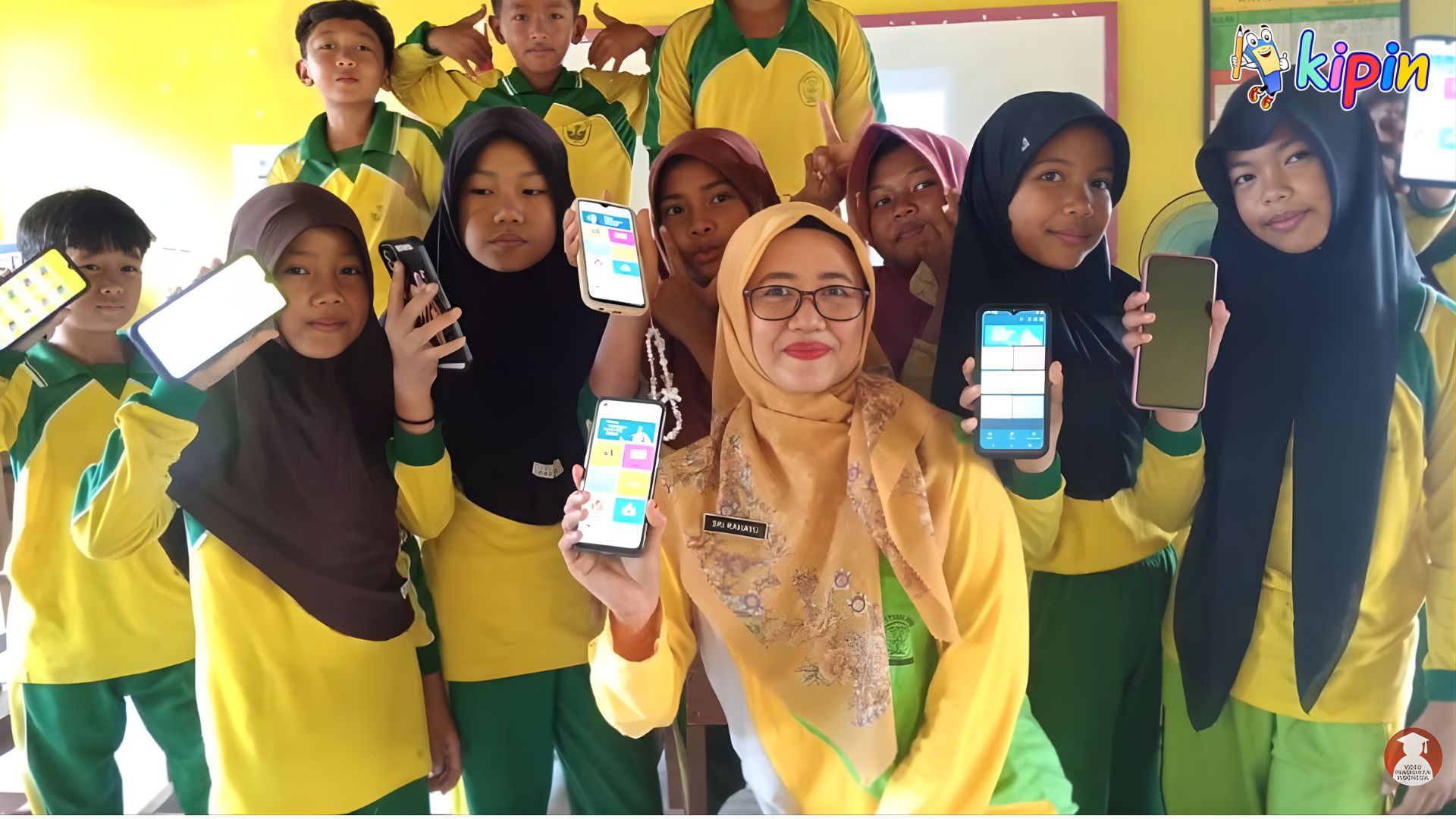
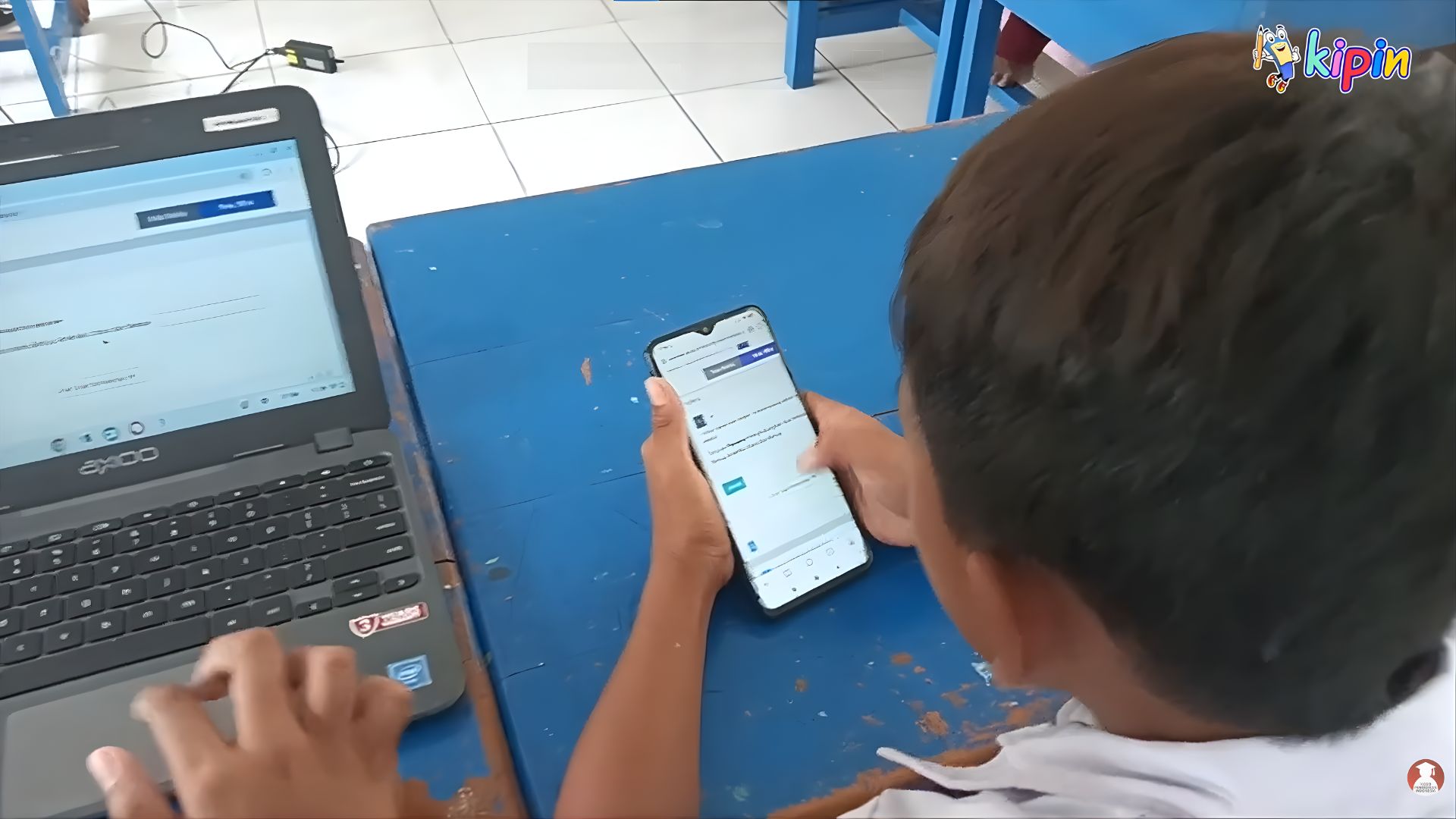
One local company, Kipin, is taking a different approach. Its educational platform can be used without the internet. All learning resources, from learning materials to evaluation requirements, are readily available and ready to use.
Learning materials are abundant and available in various formats, including books, videos, and independent practice exercises, educational literacy reading. all in line with the national curriculum. Students can access these learning materials not only at school but also at home, even without an internet connection.
Kipin is equipped with Download and Go technology. Once the materials are downloaded, students can access them at home without internet, beause of Kipin’s offline servers.
It may not be a magic bullet, but so far, this approach is the most realistic and effective solution. It’s perfect for Indonesia’s conditions.
Why This Actually Matters for Policy People
The education ministry has five big goals – better learning outcomes, less inequality, supporting teachers, digital access, sustainability. All the usual buzzwords.
But here’s what’s interesting: Kipin actually hits all of them. Not on paper. In practice. In schools that have nothing.
That’s rare. Most education technology looks great in a presentation and falls apart in the field. This doesn’t.
In Conclusion
Indonesia has the money. It has the political will. It has the vision.
What it hasn’t had is a way to connect that vision to what’s actually happening in classrooms. A bridge between “here’s what we want” and “here’s what’s possible given the roads, the internet, and the boats.”
Maybe that bridge looks like Kipin. Maybe it looks like something else. But one thing’s becoming pretty clear: the future of education in this country isn’t about more internet. It’s about smarter ways to reach kids where they actually are.
Because at the end of the day, a kid in a village without signal deserves the same shot as a kid in South Jakarta. And that’s going to take more than policy papers to fix.
Contact Us:
Web : kipin.id
Email : info@kipin.id
WA Chat : wa.me/6281233601047