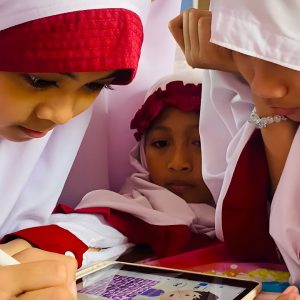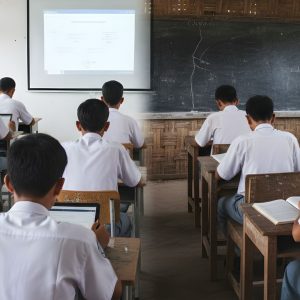
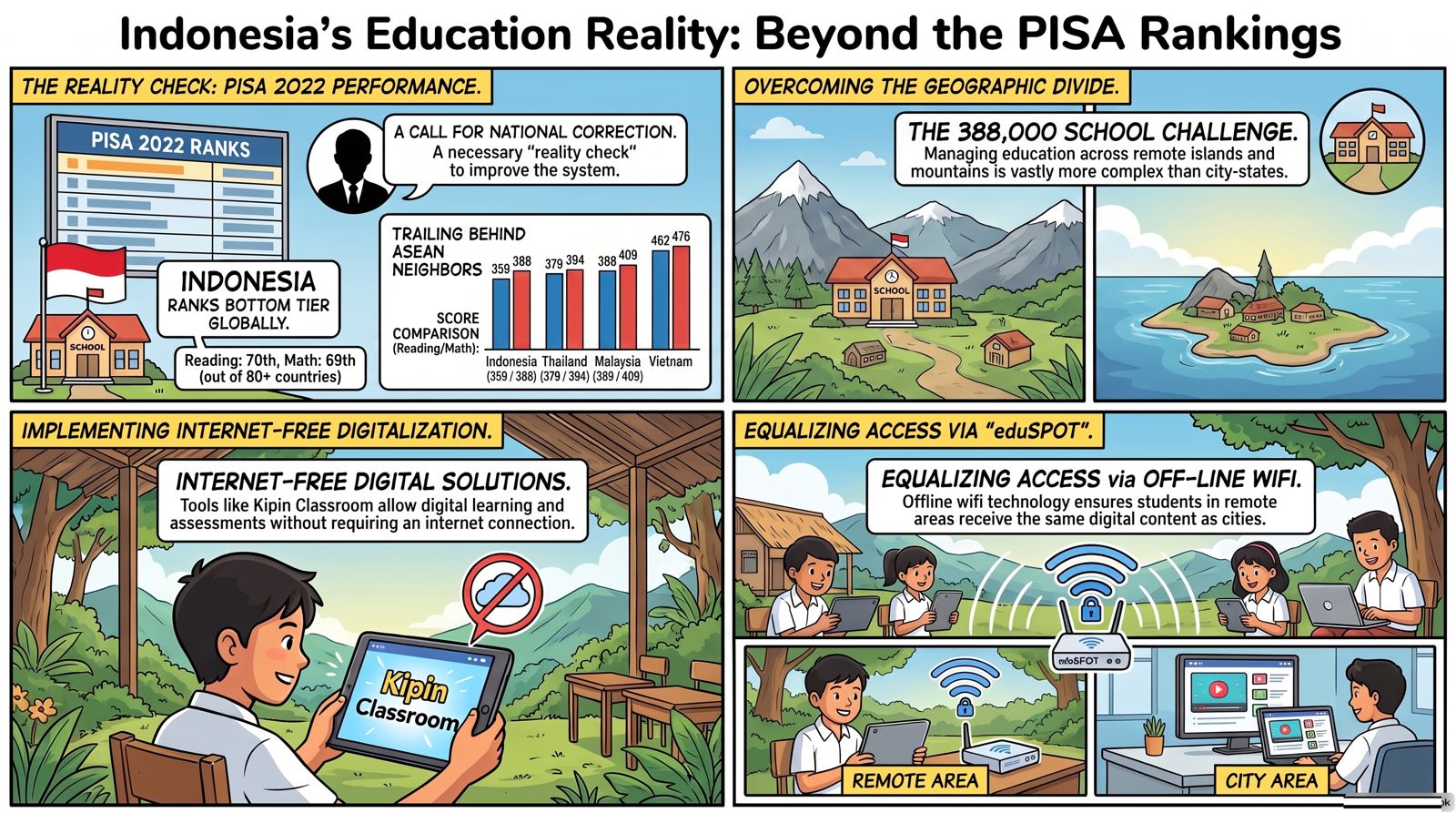
Indonesia’s education system continues to face significant challenges. President Prabowo Subianto has openly acknowledged that Indonesia’s performance in the Programme for International Student Assessment (PISA) remains relatively low, ranking below many neighboring countries. Current data indicate that Indonesian students’ literacy, mathematics, and science competencies are not only below the OECD average but also lag behind those of Thailand, Malaysia, and Vietnam. These findings serve as a strong reminder that Indonesia’s education system requires comprehensive evaluation and meaningful reforms to remain competitive on the global stage.
However, the country’s educational challenges extend beyond learning quality alone. As the world’s largest archipelagic nation, Indonesia has hundreds of thousands of schools spread across major cities as well as remote, frontier, and underdeveloped (3T) regions. Significant disparities in infrastructure, internet connectivity, and access to learning resources make educational equity an exceptionally complex challenge.
Amid these circumstances, school digitalization has emerged as one of the most promising strategies for narrowing both the accessibility and quality gaps across the country’s education system.
Why School Digitalization Matters
Digitalization enables learning materials to be distributed more quickly, efficiently, and equitably. Teachers gain access to a broader range of educational resources, while students benefit from expanded learning opportunities regardless of their geographic location.
More than simply replacing printed textbooks with digital devices, digital transformation creates a learning ecosystem that is interactive, adaptive, and aligned with Indonesia’s national curriculum.
When implemented effectively, digitalization can enhance teaching and learning processes while reducing disparities in educational quality between regions.
Kipin Supports Indonesia’s Digital Education Transformation
One of the platforms that has consistently supported educational digitalization in Indonesia is Kipin. For more than a decade, Kipin has developed a comprehensive digital learning ecosystem tailored to the needs of Indonesian schools, serving students from early childhood education through senior high school.
The platform provides a wide range of educational resources, including:
- More than 5,000 digital textbooks
- Approximately 2,000 educational videos
- Over 50,000 practice questions
- More than 500 educational literacy comics
- A variety of educational content specifically designed for children
- Kipin PTO, a dedicated digital assessment and examination platform
With these resources, schools gain practical, regularly updated learning materials while reducing dependence on the distribution of printed educational content.
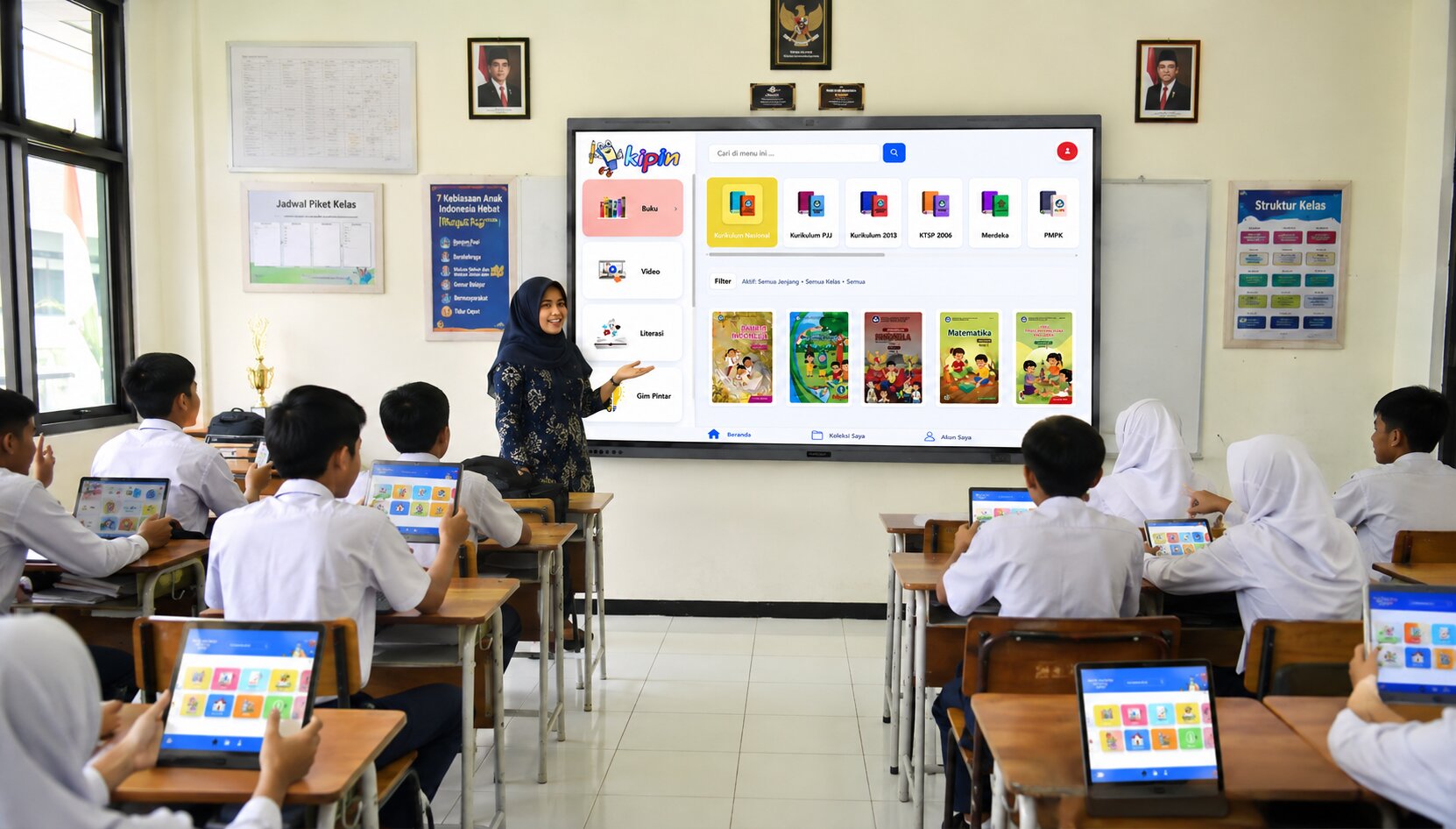
Bringing Digital Learning to Schools Without Internet Access
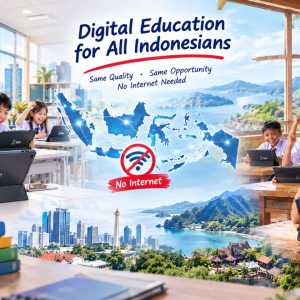
One of the greatest obstacles to educational digitalization in Indonesia is limited internet availability. Many schools still struggle with unstable connections, while others remain entirely beyond internet coverage.
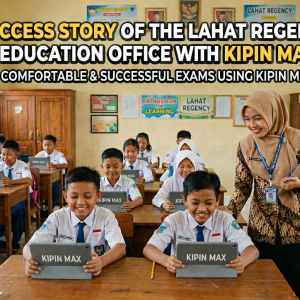
To address this challenge, Kipin offers offline solutions through Kipin Classroom, Kipin MAX, and KipinIFP, enabling schools to conduct digital learning entirely within a local network without requiring internet connectivity.
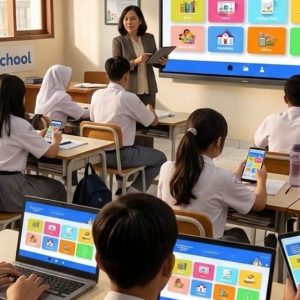
Using a local server-based learning center, teachers can distribute learning materials, assign exercises, and conduct examinations through the school’s internal network without consuming internet bandwidth or mobile data.
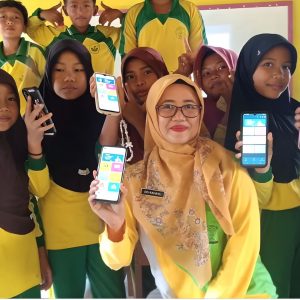
This approach makes digital education significantly more inclusive, allowing schools in both urban areas and underserved regions to benefit from the same digital learning experience.
Compatible with Existing School Devices
Kipin is designed to operate across multiple operating systems, including Android, iOS, and Windows. This flexibility enables schools to maximize the use of their existing hardware, including Interactive Flat Panels (IFPs), computer laboratories, teachers’ laptops, and other ICT equipment.
As a result, investments already made by schools and government institutions in educational hardware can be optimized through ready-to-use digital learning content.
Building a More Equitable Education System for Indonesia
Digital transformation is not a single solution to every educational challenge facing Indonesia. Nevertheless, technology serves as a powerful catalyst for expanding access to high-quality learning resources, empowering teachers, and reducing educational disparities across regions.
When digitalization is supported by quality educational content, well-prepared teachers, and equitable infrastructure, students whether in metropolitan cities or remote communities can enjoy more equal opportunities to receive quality education.
Over the long term, these efforts have the potential to improve national learning outcomes, strengthen Indonesia’s educational competitiveness, and contribute to better performance in international education benchmarks.
For More Information:
🌐 Website: kipin.id
📧 Email: info@kipin.id
📱 WhatsApp: +62 812-3360-1047