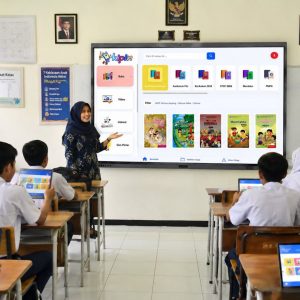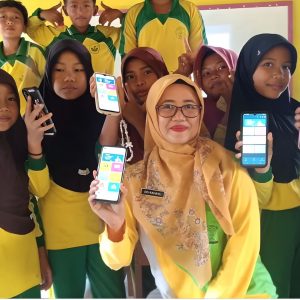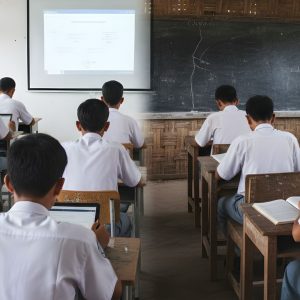
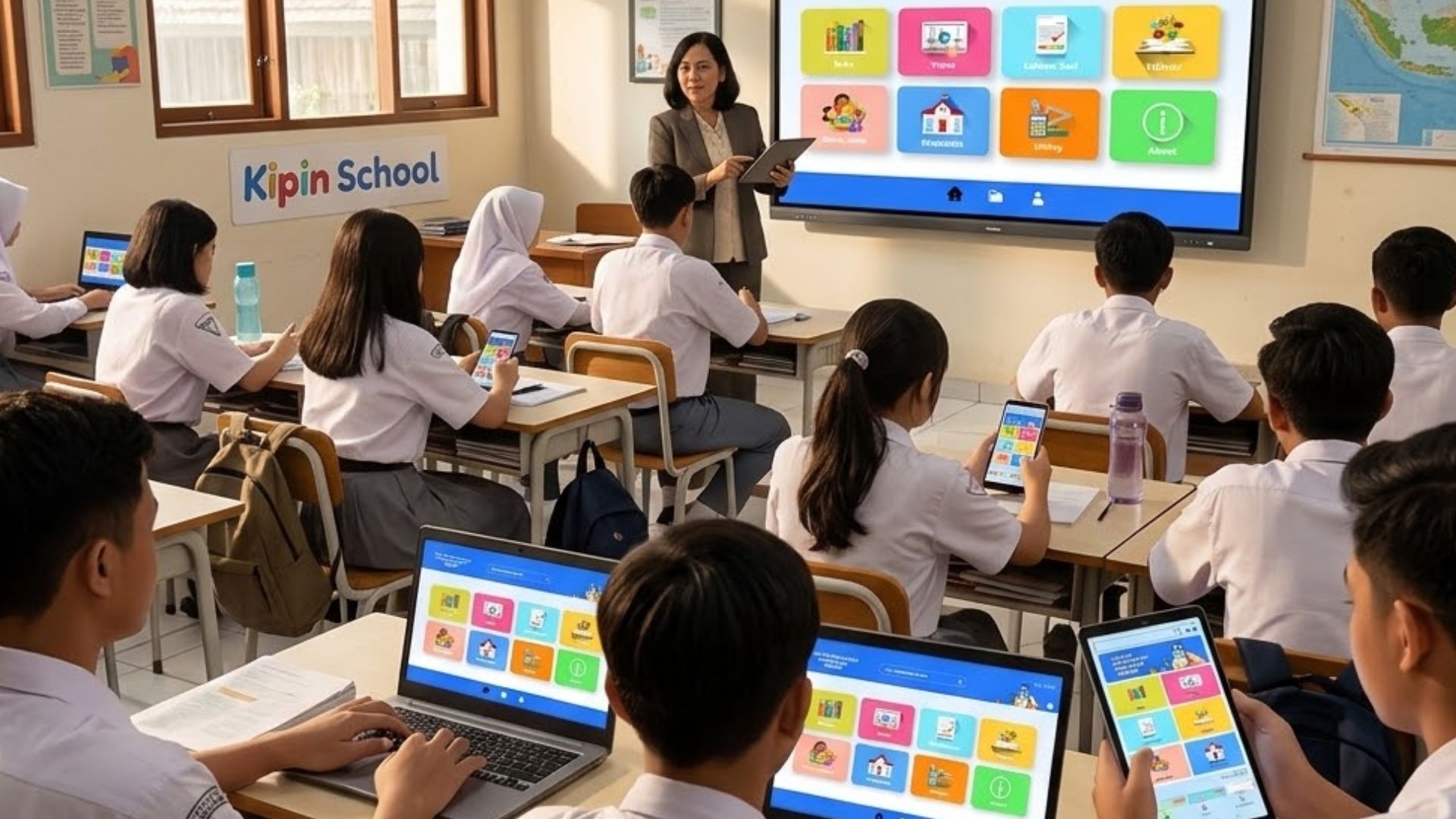
Across six schools scattered throughout Java, from elementary to senior high school level, a quiet but significant shift took place during the 2024/2025 academic year. Chalkboards and printed textbooks began sharing space with smart boards, laptops, and digital learning platforms. This transformation was the result of the Intel® Skills for Innovation (SFI) and AI for Youth program, a collaboration between Universitas Pendidikan Indonesia (UPI), Intel, Axioo, Kipin, and the Konsorsium Kita Indonesia. Rather than simply distributing hardware, the program set out to build a complete digital learning ecosystem, combining teacher training, offline-accessible content through Kipin School, and infrastructure solutions such as Intelligent Desktop Virtualization (IDV) and Axioo’s GEAR VLab. The resulting impact report offers one of the most candid pictures yet of what digital transformation actually looks like on the ground in Indonesian public education, achievements included, but so are the growing pains.
One of the clearest wins was in teacher confidence. Average scores for digital literacy and technology readiness rose from 3.41 to 3.70, an 8.6 percent increase following training and mentorship. The sharpest gains came in adaptability and independent learning, both climbing more than 10 percent. But the report also uncovered something more nuanced: teacher confidence did not grow on its own. It depended heavily on concrete support, technical guidebooks, formal certification, and, just as important, explicit permission from school principals to experiment without fear of blame. At the same time, a number of teachers experienced what researchers termed “techno-distress,” a form of technology-related anxiety, particularly when working with unfamiliar Linux-based systems or with borrowed devices they were afraid to damage.
Student engagement told an equally compelling story. The statement “learning has become more interactive” recorded the highest score of any indicator in the entire study, suggesting that classrooms genuinely felt more alive once computers, IDV terminals, and smart boards entered the picture. Yet student understanding of foundational AI, coding, and STEM concepts still landed only in the “adequate” range, a sign that Indonesian students’ AI literacy remains at an early stage, even as national policy under Permendikdasmen No. 13 of 2025 has made coding and AI official subjects. Teachers also noted a subtler risk: students’ enthusiasm for large screens sometimes resembled watching a movie more than deep learning, a reminder that visually engaging technology does not automatically translate into meaningful education unless teachers deliberately design it that way.
Perhaps the most honest findings came from the community and parent perspective. Before the program launched, 37 percent of teachers had little or no awareness of the SFI initiative, and word of mouth among colleagues turned out to be the primary way information spread. Once underway, the digital transformation was widely seen as improving the school’s standing in the community, and parents were broadly supportive of technology use in their children’s education. Even so, active parental involvement in supporting digital learning at home remained limited. In one school, the principal had to field a pointed question from a local resident: “Out here in the village, what’s the point of software? What’s booming here is automotive work.” That kind of skepticism is a useful reminder that any digital transformation program rooted in global policy priorities needs to genuinely connect with local economic realities, not simply arrive as impressive technology on paper.
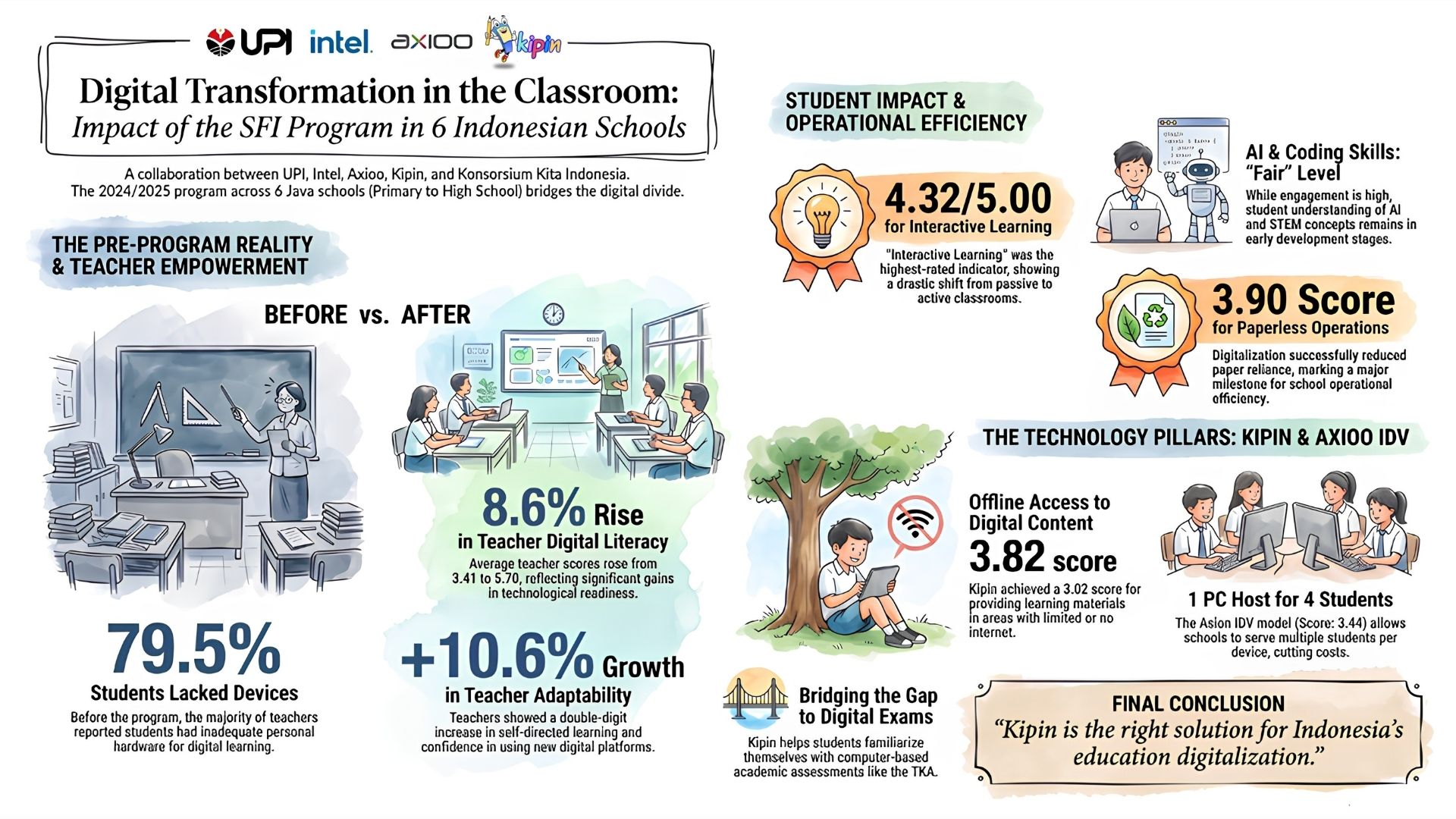
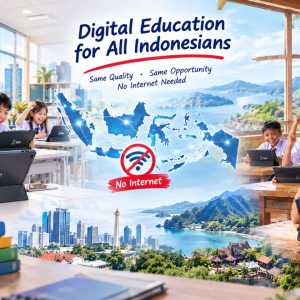
Infrastructure gaps were the study’s most sobering finding. Before the program began, 79.5 percent of teachers reported that their students lacked adequate personal devices. This is precisely the gap that Kipin School and Axioo’s IDV model were designed to close. Kipin’s offline-accessible digital library ensures learning materials stay available even where internet connectivity is unreliable, while the IDV model lets a single computer unit serve up to four students at once, dramatically lowering the cost of providing digital access. Teachers rated Kipin’s ability to keep materials available despite limited internet at 3.82 out of 5, and its offline accessibility through IDV or school computers at 3.73, both solidly in the “high” category. The report does note that integration between offline and online learning remains a weak point, and in some schools, limited device availability created unhealthy competition among students for access.
What stands out most is how teachers rated the program’s overall impact: it scored higher than any other single indicator measured in the entire study, a strong vote of confidence in the program’s value even where execution was imperfect. Digital ethics and student conduct around device use also emerged as one of the strongest social outcomes, while the reduction in paper use, scoring 3.90, one of the highest marks in the whole report, stands as tangible proof of efficiency gains that schools could feel immediately, largely enabled by having reliable digital materials available through Kipin rather than printed handouts.
Taken together, the researchers’ recommendations point to a simple but important truth: successful digital transformation in schools is never just about distributing devices. It requires sustained mentorship for teachers, practical starter resources, principals who actively champion change, and early engagement with parents. At the policy level, the report calls for minimum digital infrastructure standards, closing the funding gap between madrasah and public schools, and ensuring AI and coding curricula stay genuinely relevant to local economic opportunities. Technology can be a powerful tool for enriching teaching and learning, but it only delivers real impact when paired with confident teachers, engaged students, supportive parents, and schools with the capacity to sustain it over time.
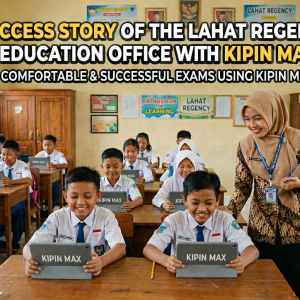
Within that broader picture, one piece of the puzzle stands out for its outsized impact relative to its cost: a platform that keeps learning materials available regardless of internet quality, works seamlessly with low-cost shared-device infrastructure, and helps students build the digital habits they need for computer-based assessments. Given the connectivity gaps, budget constraints, and device shortages this report documents across Indonesian schools, from remote madrasah to under-resourced public schools, Kipin is the right solution for Indonesia’s education digitalization.
Contact Us for More Information:
🌐 Website: kipin.id
📧 Email: info@kipin.id
📱 WhatsApp: +62 812-3360-1047