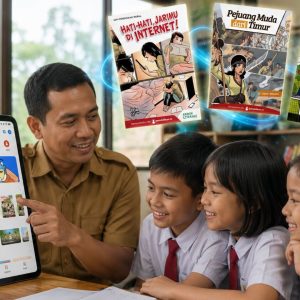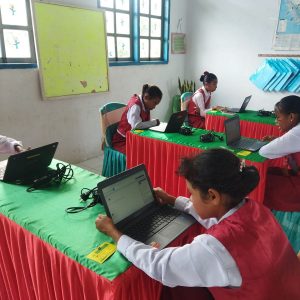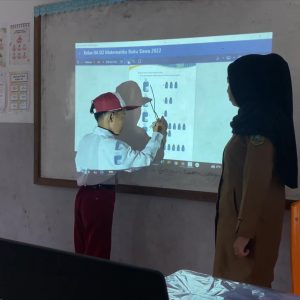

The current state of literacy and numeracy among Indonesian students has become a pressing national concern, with recent PISA scores placing the country in the lower global rankings. This data highlights a significant gap in foundational skills that are essential for the daily lives and future success of the younger generation. Recognizing this, the Indonesian government has emphasized that a fundamental shift in teaching methodology is required to address these challenges effectively.
For too long, the default solution to low scores has been “drilling”—a repetitive and rigid method of forcing students to complete endless practice problems. However, officials from the Ministry of Education (Kemendikdasmen) have stated that this konvensional approach is no longer effective; it often ruins a student’s “learning mood” and leads to burnout. Instead of fostering critical thinking, constant drilling makes children view literacy and numeracy as a burden rather than a useful skill.
In response to this, Kipin has emerged as a vital companion to the Indonesian government, specifically supporting the National Numeracy Movement (GNN). By aligning its vision with the government’s goals, Kipin provides innovative digital learning content that is perfectly suited for today’s educational landscape. This partnership ensures that the transition toward digital learning is not just a change in medium, but a significant upgrade in quality and engagement.
One of the reasons Kipin is such an effective partner is its strict adherence to the National Curriculum (Kurikulum Merdeka). Kipin has produced over 100 exclusive numeracy literacy books designed for elementary students from grades 1 through 6. By ensuring all content is curriculum-compliant, Kipin provides teachers and parents with a reliable, high-quality resource that directly supports school-based learning objectives.
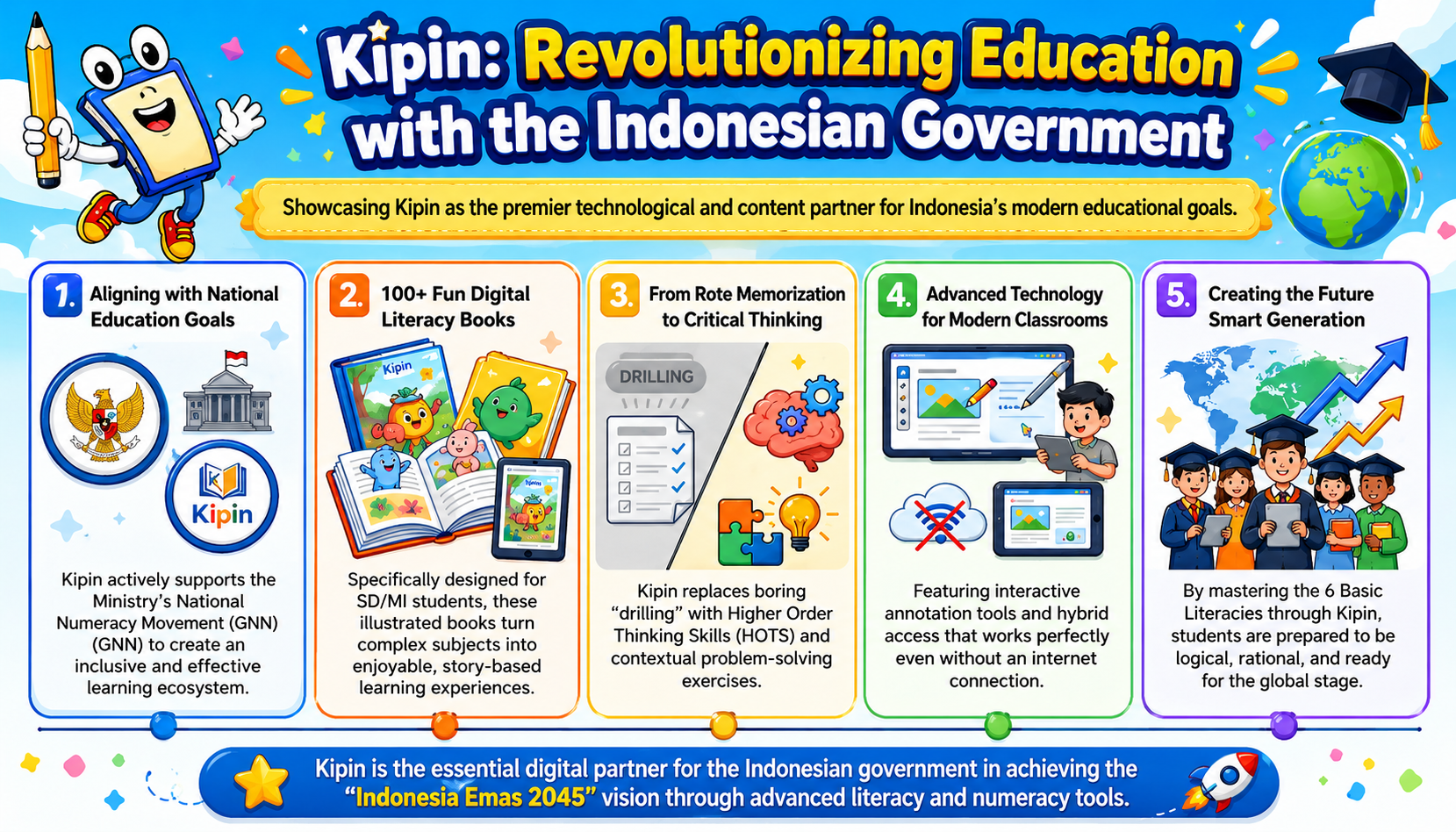
The core of Kipin’s success lies in its illustrated storybook method, which transforms intimidating subjects into fun adventures. These books use engaging visuals and relatable daily-life scenarios to teach mathematical concepts, helping children understand why they are learning to interpret data, tables, and graphs. This storytelling approach effectively removes the “fear factor” associated with math, encouraging children to learn voluntarily and enthusiastically.
Furthermore, Kipin’s technology allows for a high degree of interactivity through its annotation feature. Unlike traditional digital PDFs, students can use their devices to directly solve problems and “doodle” within the books, which helps develop their fine motor skills while keeping them engaged. This active participation shifts the student’s role from a passive reader to an active problem-solver, fostering the “Higher Order Thinking Skills” (HOTS) that the government is striving to promote.
Kipin’s most remarkable achievement as a government partner is its ability to bridge the digital divide through solutions like Kipin MAX, Kipin Classroom, and Kipin Perpus Desa. These tools allow children in even the most remote areas to download hundreds of books and educational videos completely for free and without needing an internet connection. This “Download-and-Go” capability ensures that quality education is no longer a privilege for those in big cities, but a right for every child in Indonesia.
By providing a learning ecosystem that is both fun and accessible, Kipin is playing a crucial role in building a strong foundation for Indonesia Emas 2045. The collaboration between Kipin’s innovative content and the government’s strategic vision proves that when technology is used wisely, it can turn a national challenge into a success story. Together, they are ensuring that the next generation of Indonesians will be critical, systematic, and ready to lead on the global stage.
For More Information:
🌐 Website: kipin.id
📧 Email: info@kipin.id
📱 WhatsApp: +62 812-3360-1047